Beyond the Square: Understanding the Area of a Circle in Math
Curious how the math concepts we learn in school apply to the real world? We're tackling the area of a circle and what it means to measure curved space.

There’s a certain magic in math, isn't there? You learn a concept, and suddenly you realize it pops up everywhere—from building bridges to figuring out how much paint you need for a garden shed. It’s amazing how interconnected knowledge can be, especially when you’re looking at things that aren't perfect squares.
Recently, we were looking at the area of a circle, and it really got us thinking about what "area" even means. When we talk about the area of a square, it’s straightforward: length times width. You can visualize it perfectly—a grid of little squares fitting neatly inside. But a circle? It’s curved, and that curve throws a little wrench in the simple picture.
If you’ve ever felt that pang of 'Wait, how does this work?' while looking at a geometry problem, you’re not alone. This lesson dives into the formula, $\pi r^2$, and shows us not just *what* the answer is, but *why* it works. It’s a great reminder that even seemingly abstract math concepts have real-world applications in engineering and physics!
What Does 'Area' Really Mean?
The video does a wonderful job of grounding us in the basics. For a square, area is literally counting how many little square units fit inside. If you have 10 square centimeters, it means 10 of those little centimeter-by-centimeter squares fit perfectly inside the boundary. The unit itself—square centimeters, square meters—tells you that you are measuring *coverage*, not just straight-line distance.
When we move to the circle, the concept gets trickier because of that curve. The presenter explains that even though we can’t perfectly tile a circle with squares, the principle remains: we are still counting the total amount of space enclosed. It’s a beautiful mathematical puzzle that shows how powerful a formula can be to approximate something so naturally curved.
A Little Lesson for Our Homeschool Journey
As homeschooling parents, we are constantly building our own 'curriculum' for our kids—whether we’re leaning into Charlotte Mason's love of literature or exploring a hybrid model that mixes hands-on learning with textbook study. Math is always a cornerstone, and understanding the *why* behind the math, like understanding the derivation of the circle's area, makes the subject come alive.
It’s not just about memorizing $\pi r^2$. It’s about understanding the geometry, the logic, and the sheer ingenuity of human thought. Whether you’re working through a math curriculum for your student or just curious about how these concepts are applied in the world, remembering that math is about problem-solving—and sometimes, those problems are curved!
If you enjoy seeing these kinds of foundational science and math concepts broken down, we encourage you to keep exploring! This is the kind of deep dive learning that makes a field trip to a science museum feel like coming home.
Keep challenging your family's learning environment, whether you're deep into a language arts unit or exploring a new math curriculum. Ready to take the next step in your educational journey? Find a teacher who can help guide your family through the next concept, or claim a Faculty profile to share your own expertise!
Frequently Asked Questions
Loading comments...
Related Posts
When Shapes Become Stories: Finding Unity in Advanced Math

Seeing the Math in the Geometry: Understanding Transformations Like a Field Trip
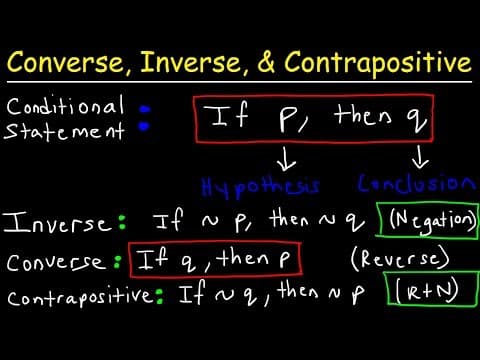
Logic Lessons for Little Minds: Mastering Conditional Statements
