Cracking Quadratics: It's About Seeing the Structure
Remember that feeling of being completely lost with quadratics? Davee does. Let's break down the quadratic formula not just as a formula, but as a tool for understanding the *why* behind the math.

Hey Rogue Mathematicians! Remember when quadratics felt like a tangled mess of variables and symbols? I do. I vividly recall a Stripling Mathematician, Liam, staring blankly at a practice problem, convinced he'd never 'get' it. What clicked for Liam wasn't just memorizing the quadratic formula; it was seeing the underlying structure. That’s the key – math will click when it's taught your kid's way.
We've all been there. Maybe your child is struggling with fractions, or maybe they're zipping through precalculus, but something just isn't quite connecting. Whether you're a homeschool parent using Saxon or Singapore Math, or a public school teacher looking for extra support, this post is for you. And if you've got a young one who dreams of conquering AMC 8s and beyond – or just wants to create their very own Currency Kids character and have Davee guide them through the lessons as *that* character (yes, it’s happening!), stick around.
Today, we’re revisiting the quadratic formula. It’s a classic, and often a source of frustration, but it doesn’t have to be! Let’s look at how to see the structure, not just execute the steps.
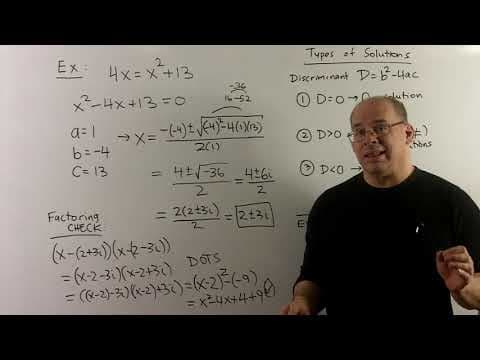
The video walks through several examples, and the instructor emphasizes a crucial point: getting the equation into standard form (ax² + bx + c = 0) is the first, vital step. It’s not just about rearranging terms; it’s about recognizing the pattern. Think of it like this: the quadratic formula isn't a magic spell; it's a recipe. You need the right ingredients (a, b, and c) in the right order.
Notice how the instructor meticulously identifies 'a', 'b', and 'c' in each example. This seemingly small detail is HUGE. It forces you to *see* the coefficients, to understand their roles. Then, the substitution into the formula itself becomes less of a rote exercise and more of a logical application.
He also takes the time to simplify the radical. This is a great opportunity to review simplifying radicals and perfect squares. If your Stripling Mathematician is still building that foundation, revisit RightStart Math or Memoria Press – those manipulatives and visual aids can make a real difference.
For those aiming for MATHCOUNTS or AIME, mastering the quadratic formula is non-negotiable. But don't just drill problems; focus on the *why*. Can you derive the formula yourself? Can you explain it to someone else? That deeper understanding will serve you far better than memorization ever could. Eddie Woo’s videos on Numberphile are fantastic for exploring the origins of mathematical concepts.
And for our visual learners out there, check out 3Blue1Brown's videos on linear algebra. They beautifully illustrate the underlying principles that govern many mathematical concepts, including the quadratic formula. Understanding the 'big picture' can make even the most intimidating formulas feel more approachable.
A few key takeaways from the video:
- Standard Form is Key: Always get your equation into ax² + bx + c = 0.
- Identify a, b, and c: Be meticulous – a small mistake here will throw everything off.
- Simplify Radicals: Don’t leave radicals as simplified as possible.
- Understand Two Solutions: Recognize that the ± sign means there are usually two possible answers.
Whether you're easing back into algebra after a break, or guiding your Stripling Mathematician towards the Math Olympiad, the quadratic formula is a vital tool. But remember, it’s not about speed or memorization; it's about understanding. Take your time, explore the structure, and celebrate those “aha!” moments.
Ready to level up? Join us at the next Math Circle, where we'll tackle even more challenging problems and delve deeper into the world of mathematics. Or, connect with a Math Master in our community for personalized guidance. And if you're a parent, remember the power of self-as-teacher – let your child create a Currency Kids character and let Davee teach the lesson AS that character!
Frequently Asked Questions
Loading comments...
Related Posts
Unlocking Quadratics: The Quadratic Formula as Your 'Razor'

Finding Common Ground: Fractions and the Joy of 'Aha!' Moments

Unlocking Exponents: It's Easier Than You Think!
