Decoding Trigonometric Identities: A Quadrant-Aware Approach
Pythagorean Identities can feel like a tangled web, but understanding quadrants unlocks their secrets. Let's break down a practice test and build your trigonometric intuition – especially for those who feel like math just hasn't *clicked* yet.

Hey Rogue Mathematicians! Davee here. I remember a kid, bright as a button, wrestling with trig identities. He felt lost in a sea of symbols, convinced he just *couldn't* grasp it. But we kept at it, focusing on the underlying logic, and slowly, surely, it clicked. That's what we're about here – finding that 'click' moment for every student, no matter their starting point. If your child is using Saxon, Math-U-See, Singapore Math, or even Beast Academy and feeling frustrated, remember: math will click when it's taught your kid's way. Maybe they're a visual learner who needs 3Blue1Brown’s elegant explanations, or a kinesthetic learner who thrives on manipulatives – we're here to support that journey.
Today, we're diving into a practice test on Pythagorean Identities. This isn't about rote memorization; it's about understanding *why* these identities work and how to apply them. This is especially crucial for students aiming for AMC 8/10/12, AIME, or even USAMO – a strong foundation in trig is essential!
For our Stripling Mathematicians, this is a chance to sharpen your problem-solving skills. For those just starting out, consider having your child create a Currency Kids character – I can even teach the lesson *as* that character! It's a fun way to engage and build confidence. Public-school teachers and homeschool parents alike, welcome! We believe in lifting everyone up in the world of mathematics.
Let's get to it!
The video walks through several problems, but the key takeaway is this: understanding the unit circle and the quadrants is *everything*. You can't solve these problems without knowing where Theta lies. If you're using RightStart or Teaching Textbooks, make sure you've reviewed your unit circle fundamentals!
Let's break down the first problem together. We're given cosecant(θ) = -5 and cosine(θ) > 0. The first step isn't to plunge into formulas; it's to figure out which quadrant Theta is in. Cosecant is the reciprocal of sine, and sine is negative in quadrants III and IV. Cosine is positive in quadrants I and IV. Therefore, Theta must be in quadrant IV.
The video then expertly guides us through the steps: using the Pythagorean identity (sin²θ + cos²θ = 1), finding sin(θ) = -1/5, calculating cos(θ) = (2√6)/5, and finally, determining cot(θ) = -√6. Notice how each step builds on the previous one, and how crucial the quadrant information is to selecting the correct sign for cosine and cotangent. This mirrors the approach Mr. D Math uses – clear, step-by-step explanations.
If you're following a curriculum like Art of Problem Solving (AoPS), this is a great opportunity to reinforce your understanding of trigonometric functions and identities. Even if you're using Khan Academy for supplemental practice, these foundational concepts are vital. Eddie Woo’s videos on the unit circle are also worth revisiting for a fresh perspective.
Remember, mastery isn't about speed; it's about understanding. Don't rush. Embrace the process. And most importantly, be patient with yourself and your child. Even Mathologer appreciates a slow and methodical approach to learning!
Ready for the next challenge? Join a Math Circle to collaborate with other enthusiasts, find a Math Master for personalized guidance, or let my per-student Math companion help you navigate the complexities of trigonometry. Let's aim for an Easy Score of 6 on this topic – you’ve got this!
Frequently Asked Questions
Loading comments...
Related Posts
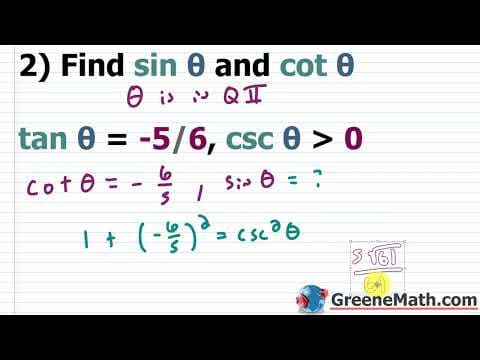
Pythagorean Identities: Finding Your Quadrant Sweet Spot

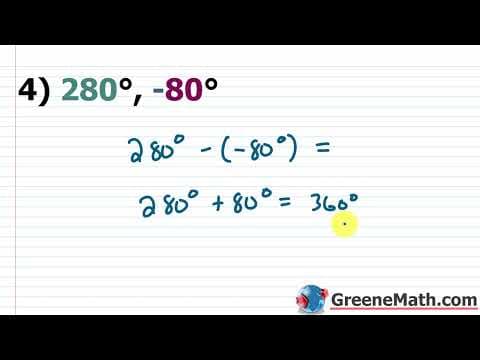
Angles, Angles Everywhere: Cracking Coterminal Angles with Greene Math
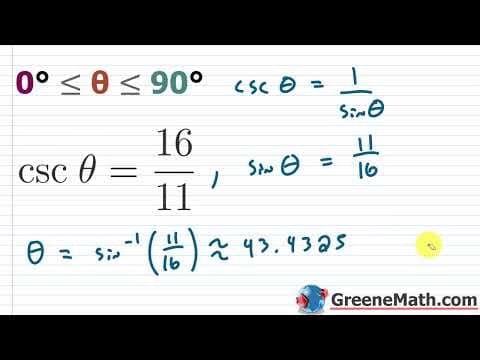
Calculator Confidence: Trigonometry Doesn't Have to Be Scary!