Forging an Axe: A Lesson in Patience and Problem Solving
Ian Z tackles a project many bladesmiths shy away from: forging an axe! Join him as he experiments with a symmetrical-folded technique, facing challenges and learning valuable lessons along the way.

There's something primal about it, isn't there? A hand-forged axe, echoing the ingenuity of our ancestors. It’s more than just a tool; it's a connection to the roots of bladesmithing. Many of us focus on the finesse of a chef’s knife or the elegance of a katana, but sometimes, stepping back to the basics—to something as fundamental as an axe—can be incredibly rewarding. Ian Z recently took on that challenge, and his journey is a great reminder that even experienced knife makers can learn a lot from simpler projects.
Ian, who’s been studying techniques from the likes of Neil Augren, decided to try a symmetrical-folded approach. It’s a bold move, especially when you're learning, but it promises a unique look and potentially a stronger head. As he puts it, it was a chance to “create a better result” for the design he envisioned. The use of 200-year-old rot iron, destined for a beautiful wood-grain etch, added another layer of intrigue.
The video isn't just a demonstration; it's a masterclass in problem-solving. The initial forge weld failed, and Ian didn't shy away from showing the frustration and the adjustment required to get it back on track. That’s something we all experience – the forge doesn’t always cooperate. Seeing a maker openly address those setbacks is invaluable. It’s a reminder that bladesmithing isn’t about flawless execution; it’s about adapting and persevering.
He meticulously explains his process, from using a hardy block to create crisp isolations to employing a cross pin to pull material for the lugs – those distinctive cheek shapes reminiscent of Viking axes. We also see him reach for the grinder to help profile the shape, a honest moment showing the tools a maker uses in the process. The lugs, especially, are a testament to the skill involved in shaping metal—getting them just right requires a keen eye and a steady hand.
The decision to incorporate high-carbon steel into the axe head to improve the cutting edge is a practical one, demonstrating an understanding of metallurgy. Rot iron, while beautiful, isn't ideal for a functional cutting edge. This highlights the importance of not just aesthetics but also the intended use of the tool.
For those working towards Blade Angel status, Ian's approach offers several opportunities for reflection. It emphasizes the value of observation (studying Neil Augren's methods), experimentation (the folded design), and resilience (overcoming forge weld failures). Even the most seasoned bladesmiths can benefit from revisiting the fundamentals and tackling projects outside their comfort zone. And for those just starting out, it’s a clear demonstration that learning is a continuous process, even for professionals.
If you’re looking to expand your skills, consider signing up for a forge class at a HolyPlace or joining a Field Trip to a local bladesmithing shop. Want to share your creations with the community? List a custom commission or create a creator profile – let your craft be seen!
Frequently Asked Questions
Loading comments...
Related Posts
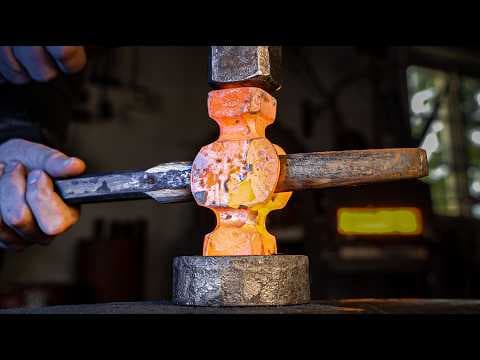
The Kneading of Steel: Nils Ogrén's Hammer-Forging Philosophy

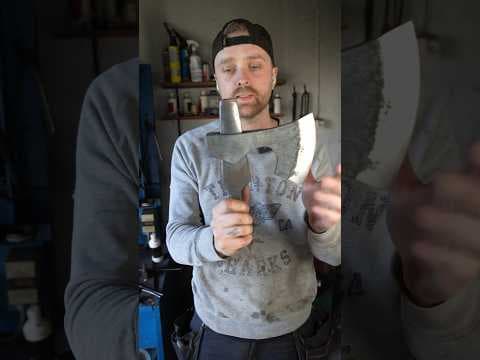
The Axe Eye Drift: A Simple Tool, a World of Difference
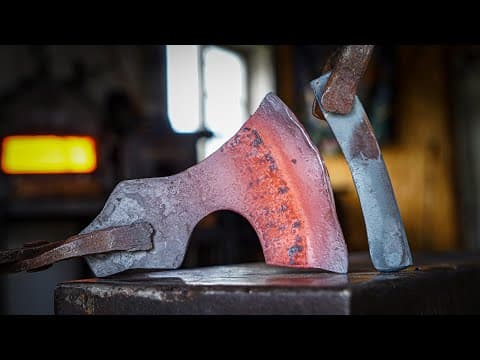
Forging a Bearded Axe: Nils Ogren's Step-by-Step Guide