Forging Luxury: A Damascus Chef Knife with Integral Bolster
Ian takes us through the entire process of crafting a stunning Damascus steel chef knife, showcasing intricate techniques like feathering and an integral bolster—a true blend of artistry and functionality.

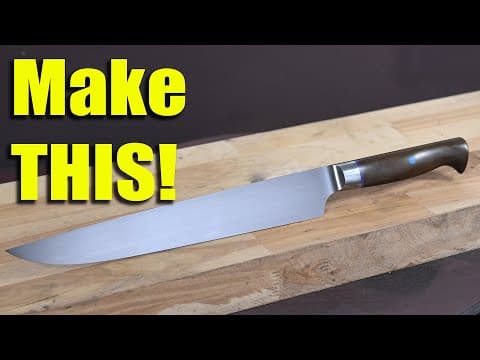
There's a certain satisfaction in seeing raw steel transform into a precision tool, especially when that tool is a chef's knife built for performance and beauty. Ian's latest video delivers on that promise, walking us through the creation of a Damascus steel chef knife with an integral bolster and a hand-carved ivory handle. This isn’t just about making a knife; it’s about integrating form and function into a piece of art.
If you've been following along with the Rogue Blades movement, you know we appreciate the craftsmanship and skill involved in every step of the process, from the initial billet to the final sharpening. It's the kind of dedication that separates a mass-produced blade from a hand-forged heirloom.
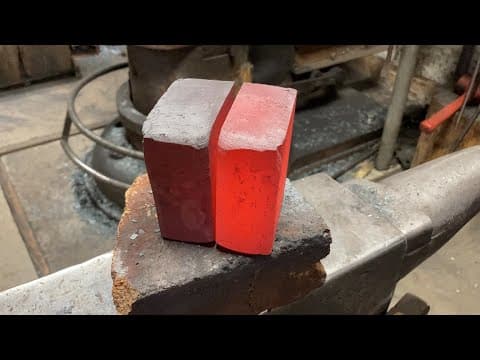
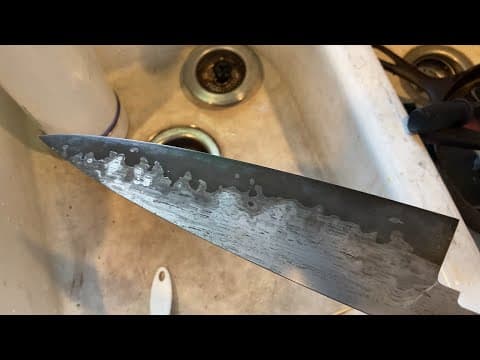
The video kicks off with the Damascus steel creation itself. Ian opts for a feather pattern, a favorite of his for its organic look. The process of layering 1084, 15N20, and 1095 high-carbon steels and then forge welding them is a visual lesson in patience and precision. He breaks down the steps—cleaning the steel, initial forge welds, and then the crucial feathering process – clearly explaining how each fold contributes to the final pattern. It’s the kind of detail a bladesmith or aspiring knife maker will find invaluable.
He stresses the importance of homogenizing the steel after these complex forge welds, a crucial step often overlooked. Letting the billet rest in the forge and slowly cooling it allows the internal structure to stabilize, preventing cracks and ensuring a strong, reliable blade.
The integral bolster is a standout feature. Ian demonstrates the technique of forging it directly into the blade, requiring careful manipulation of the steel and a keen eye for detail. It’s a testament to his skill and a departure from more conventional bolster construction. He also touches on the importance of preforms, a key stage to any good forging, and how understanding them is crucial for more complex projects.
For those interested in exploring these techniques themselves, consider a forge class or even a Field Trip to a local bladesmithing shop. Seeing these processes firsthand is an unparalleled learning experience. You might even spot a Blade Angel ready to share their expertise.
If you’re looking to commission a custom blade like this one, Ian’s email is provided in the video description (ianzforge@gmail.com). Supporting independent knife makers like Ian is vital to the continued growth and evolution of the craft. You can also explore listing a custom commission of your own on the Rogue Blades platform to connect with potential clients.
Whether you’re a seasoned bladesmith, an aspiring knife maker, or simply an admirer of fine blades, Ian’s video offers a captivating look into the artistry of knife making. It’s a reminder that true craftsmanship is about more than just cutting; it's about passion, dedication, and a deep respect for the materials and the process.
Frequently Asked Questions
Loading comments...
Related Posts
Mastering the Integral Bolster: Forging a Chef's Knife That's Forged in One Piece

Distortion and Depth: Salem Straub's Feather Damascus Chef Knives, Part 4

Handle Fabrication & Etching: Wrought Iron San Mai Chef Knife Build - Part 4