From Foam Foundation to Lush Landscape: Sculpting Terrain Like a Master Artist
Even if your hands are usually covered in paint, the principles of sculpting and texture transfer to everything—including massive, intricate diorama builds.

There’s a deep satisfaction in building something massive, intricate, and totally physical. For the Rogue Artists community, we’re used to finding that satisfaction in the perfect blend of oil paint or the satisfying resistance of charcoal on a sketchbook page. But sometimes, the same dedication to detail, composition, and layering shows up in unexpected places—like in the creation of an enormous, detailed board game diorama.
What we watched was a creator take a beloved classic board game and give it a monumental 'glow up.' The process wasn't just about assembling pieces; it was a masterclass in translating abstract biomes—desert, pasture, forest—into physical, sculpted terrain. It reminded us that the fundamental principles of art are universal, whether you’re blending glazes on canvas or carving a dune out of foam.
Sculpting the Biome: Translating Concept to Form
The artist began by establishing the foundation: laser-cutting dozens of hexagonal tiles from foam and MDF baseboards. This is where the foundational composition begins—you have a clean, structural base before any creative decisions are made. The real magic, however, started with the sculpting. Watch how the creator uses hot cutters to carve away gouges and indentations, giving the dunes and hills their natural, lived-in curvature.
When approaching a landscape, think about the value and texture. The desert, for instance, is treated as a 'Barren Wasteland'—a limited palette of sandy ochres and dusty tones. Yet, the artist shows us how even the most 'unexciting' subject can be elevated with careful surface treatment, like building up the sandy roads to make them stand out as a distinct element of composition.
Layering and Blending: The Art of the Pasture
The most breathtaking section was the transformation of the pasture. The initial cuts were harsh and angular, but the artist knows that nature rarely presents itself in sharp edges. By sanding and grinding back the craggy surfaces, they achieve a soft, lush, curved mountain range—a perfect lesson in blending. This is where the process becomes less about construction and more about controlled artistic layering.
To make the pastures look genuinely alive, the creator employed multiple techniques: applying sculpter's mold mixed with Mod Podge for a foundational layer, and then, crucially, building up the texture with static grass. This process demonstrates how building up material, layer by layer, gives depth and realism that simple paint couldn't achieve alone. It’s the physical equivalent of building up thin washes and glazes on a portrait.
The lesson here for any artist—whether you are doing figure drawing or painting a still life—is that the final, beautiful look is always a cumulative effort. It's the foundation, the sanding, the glue, and the final sprinkle of detail that makes the piece sing.
This isn't about being a master builder; it's about mastering the *process* of giving a concept life. It reminds us that the most rewarding art is the kind that is deeply tactile and hands-on.
Back to the Easel
Whether you find your flow state in the delicate blending of watercolor on paper, the robust structure of ceramics on the wheel, or the precise line work of pen and ink, remember the principles of the diorama: build a solid foundation, refine your edges, and always, always layer your details. Don't let the digital world distract you from the satisfying grit of the physical medium.
Ready to get your hands covered in something beautiful and messy? Find an Art Angel near you, book a workshop, or list your studio today. Let's get back to the good, hard work of making things.
Loading comments...
Related Posts
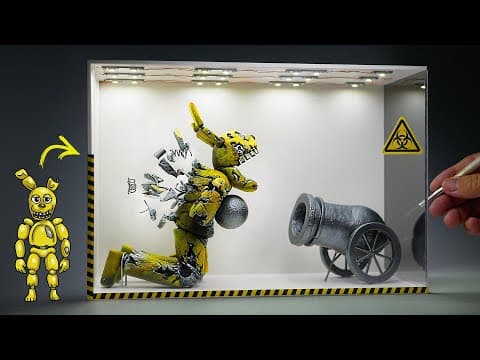
Sculpting the Spooky: A Look at a FNaF Springtrap Diorama

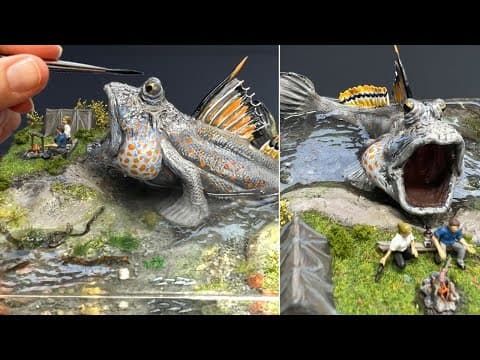
Monster Diorama: Sculpting a Mudskipper Mayhem Scene

The Art of Scarcity: Building Beauty with Found Materials
