Mastering Math Order: PEMDAS for Every Future Scholar
Don't let tricky math expressions throw a wrench in your lesson plans. We break down PEMDAS so your student can tackle any order of operations!

There are moments in homeschooling—whether you’re working through a unit on fractions, tackling a tricky passage in literature, or just trying to plan out a week’s worth of lessons—when one small detail can derail the whole thing. In math, that small detail is the order of operations. It’s the difference between a correct answer and a sigh of collective exasperation!
If you’ve ever felt like your student was getting tripped up by an expression that looked simple but felt like a tangled knot of numbers, you know the feeling. It’s not about knowing *how* to add or subtract; it’s about knowing the *right sequence* to do it in. For those of us guiding our children through rigorous academic work, mastering these fundamentals is key to building confidence.
Understanding the Rules: PEMDAS Explained
The good news is that this system, PEMDAS, is a reliable roadmap. It’s a set of rules that dictates the exact order in which we must solve mathematical problems. Think of it like the structure of a well-written essay or a perfectly planned field trip—there’s a necessary order to get to the best outcome!
The acronym stands for: Parentheses, Exponents, Multiplication and Division, and Addition and Subtraction. The video we found breaks this down beautifully, showing how each step builds on the last. It’s wonderfully systematic, which is exactly what we love when we are building foundational skills in our little scholars.
Applying the Steps: A Step-by-Step Look
What really shines in watching this video is the step-by-step nature of the explanation. It doesn't just list the rules; it *shows* you how to rewrite the problem after each step. This "rewriting" concept is gold for parents and co-op leaders alike because it makes the abstract process concrete. Instead of just saying, "Do parentheses first," the lesson shows, "Okay, this part becomes 11, so now we rewrite the whole problem like this..."
For those of us who are teaching a hybrid school model, or perhaps leading a homeschool co-op that covers everything from language arts to advanced math, having clear, repeatable processes is a lifesaver. Whether you're using a structured curriculum like Sonlight or blending in more unschooling exploration, knowing when to apply rigid rules versus when to let curiosity lead is an art. PEMDAS is the perfect example of when the structure needs to take the lead.
A Quick Tip for Addition and Subtraction
One of the most common slip-ups, which the video highlights perfectly, is forgetting that multiplication and division, and addition and subtraction, are handled left-to-right! It’s not always "do all the multiplying first, then all the dividing." You just read it like you read a book—left to right. Remember that!
Whether you are diving deep into classical education concepts, working on a rigorous math curriculum, or just need a refresher for your own sanity, this video is a fantastic, digestible resource. It proves that even the most abstract mathematical concepts can be broken down into manageable, sequential steps.
If your family is looking to build a strong academic foundation this year, remember that learning these core skills in math is just as important as mastering grammar rules in language arts. We want to support your journey, whether you're planning a big field trip or just need a solid plan for next Tuesday's micro-school session.
Ready to put these skills into practice or find more resources for your homeschool curriculum? Take a Field Trip with us to see how these concepts play out in the real world, or claim a Faculty profile to connect with a mentor who can guide you through your academic year!
Frequently Asked Questions
Loading comments...
Related Posts
Building the Math Foundation: What Every Homeschooler Needs to Know for STEM Dreams

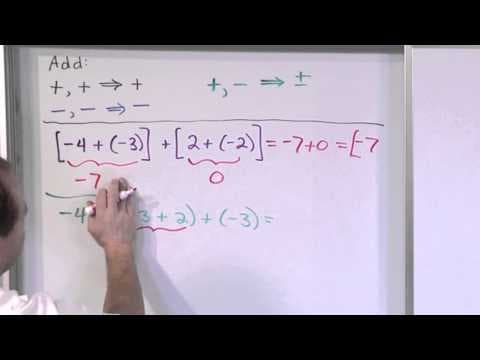
Taming the Integers: Making Math Concepts Feel Solid Again

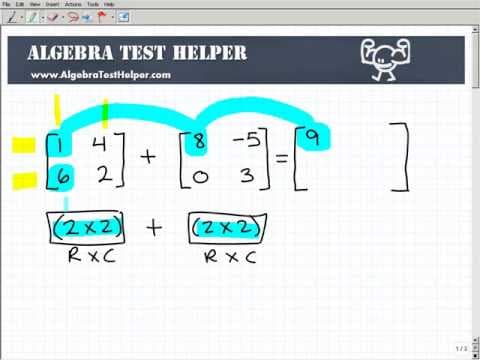
Beyond the Basics: Seeing How Math Organizes Information
