The Ammonia Gambit: Thinking Beyond the Water Change Cycle
We all know the ritual: the massive water change, the constant cycle management. But what if the solution isn't more water, but a smarter bio-load management strategy?

You know the drill. You’ve got that pristine 55-gallon setup—maybe it’s a vibrant planted tank showcasing some gorgeous Anubias, or perhaps it’s a deep-water cichlid habitat where the Oscars are doing their thing. You’ve dialed in the filtration, you’ve nailed the water parameters, and you’ve gotten used to the sheer *volume* of water you have to dump out every few weeks. The water change. It’s the constant, necessary chore that keeps us all tethered to the maintenance cycle.
It’s a rite of passage for any serious hobbyist, whether you’re deep into the nuances of guppy genetics or meticulously arranging an iwagumi scape. We treat water changes like the ultimate form of stewardship—a necessary offering to keep the ecosystem humming. But what if we’ve been focusing too much on *dilution* and not enough on *optimization*?
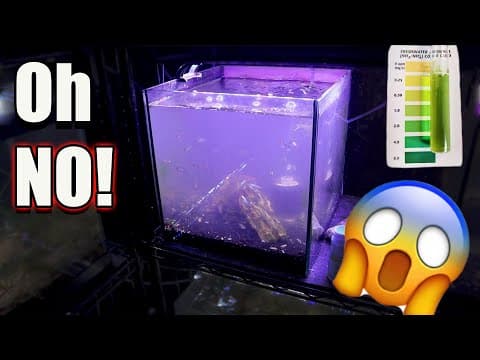
I watched a video the other day that really got my gears turning, and it challenged the very premise of what we think is 'safe' when it comes to establishing a new biofilter. The creator was intentionally spiking ammonia, not to poison, but to *feed* the beneficial colonies.
The Science of the Ammonia Spike
When you’re building out a new filtration system—say, a brand new sump setup or prepping a massive biofilter for a new section of your fishroom—you need a jumpstart. You need to get those nitrifying bacteria colonies established fast. The traditional advice is to just cycle it slowly, adding a little ammonia source here and there. But this demonstration showed a more aggressive, targeted approach using ammonium chloride.
The goal, as I gathered, isn't to keep the ammonia high—heaven forbid!—but to create a controlled, high-input environment to force the bacteria to colonize and multiply rapidly. They eat the ammonia, and in doing so, they are establishing the robust biological backbone that will eventually handle the waste from your prized tetra school or your breeding stock. It’s less about the poison and more about the *fuel* for the microbial life.
It reminded me that while we are stewards of these incredible creatures, our understanding of their basic life support systems—the biofilter itself—can sometimes benefit from a more 'hands-on' approach than what's taught in basic manuals. It’s a little bit of controlled chaos to achieve long-term stability.
If you’re looking to boost a new filter, or perhaps you're setting up a new aquaponics chapter for the Holy Rogue Network and need to rapidly establish the nitrifying bacteria in your grow beds, this video is worth watching to see the process firsthand.
Rethinking Maintenance: From Water Changes to Systems
This whole process makes you think about the fundamental shift in advanced fishkeeping. We are constantly fighting the urge to just dump water and start over. But the real mastery, the kind that moves us from Certified Rogue Aquarist territory up to Aqua Angel status, is understanding the *system* so well that the maintenance becomes proactive, not reactive.
This is where aquaponics shines. Instead of viewing the waste products (ammonia, nitrite, nitrate) as something to be diluted and removed via massive water changes, we view them as *nutrients*. We are turning the waste stream into a food stream for plants, which in turn stabilize the water chemistry for the fish. It’s a closed-loop system that honors the natural cycle and minimizes the need for constant, disruptive water dumping.
For those of us who are getting into the deeper end—the serious discus or the high-density fancy guppy setups—understanding nutrient cycling is everything. It's not just about keeping the water clean; it's about keeping the *entire biological engine* running optimally.
If this discussion got you thinking about optimizing your current setup, I highly recommend checking out some advanced tank builds. Maybe it’s time to upgrade that HOB filter to a proper canister setup, or perhaps you’re ready to look into a dedicated Tank Topper to give your primary display piece the filtration power it deserves.
For those interested in learning more about advanced biofiltration techniques or how to start a local aquaponics chapter, let’s connect. We’re building a network of knowledge, one robust biofilter at a time.
Frequently Asked Questions
Loading comments...
Related Posts
The Hard Truth About 'Cycled' Tanks: When Your Biofilter Isn't Enough


Beyond the Test Strip: Understanding Ammonia Toxicity and the Science of Water Quality

From 20,000 Liters to the Genesis: Lessons in Scale and Stewardship
