
The Art of the Layer: What Baked Alaska Teaches Us About Perfect Loaf Structure
Whether you're building a towering dessert or perfecting the crumb of an artisan loaf, structure and temperature control are everything.

Sometimes, you stumble across a bake that looks utterly impossible. Maybe it’s a towering stack of flavors, or perhaps it’s a crust so perfect it looks like it was sculpted by the gods. Watching someone create something that intricate can be both inspiring and frankly, a little overwhelming. It makes you wonder, doesn't it? What is the secret to making something so stable, so beautiful, and yet so delicate?
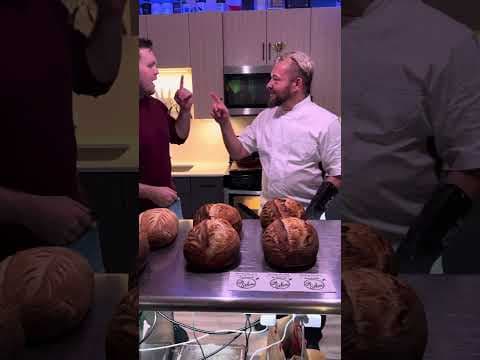
Recently, we watched a demonstration of a Baked Alaska—a masterpiece of temperature contrasts, layers, and sheer ambition. Now, if you’re thinking, 'How does a meringue have anything to do with my sourdough starter?' Well, listen close, cobber. The lesson here isn't about ice cream; it's about the fundamental principles of structure, cooling, and timing that apply to every single loaf we bake.
Structural Integrity: The Universal Lesson
Look at the process. Everything needs to be stable before the next layer can be added. The brownie needs time to cool enough to support the ice cream, and the meringue needs to be ready to withstand the blast of heat. It's a masterclass in managing transitions.
When we bake an artisan loaf, we are doing the same thing, just with wild yeast and flour. The structure of the crumb, the lift of the loaf, and the integrity of the crust are all dependent on managing those transitions: from the rapid rise during proofing, to the initial bake, and finally, the cooling process.
The Importance of the Cool Down
The baker in the video notes that the brownie needs to cool down before the next layer can go on. If you stack that meringue on a hot, gooey surface, it'll just collapse, won't it? It'll slide off like a pair of socks on a wet floor.
This is a lesson for every Rogue Baker. Don't rush the cooling process. When you pull a beautiful loaf out of the hot oven, resist the urge to slice into it immediately. Let it cool on a cooling rack, fully. Why? Because the internal temperature needs to stabilize, allowing the structure to set completely. If you cut it while it's still too hot, you risk tearing the delicate crumb, or worse, having steam escape too rapidly and ruining the texture you worked so hard for.
Applying the Principles to Your Loaf
So, what does this mean for your next bake? It means thinking about your process in layers:
- Pre-Bake Prep: Are you allowing enough time for your levain to mature and give you a robust starter? A strong start is like a solid base layer.
- Proofing: Are you giving your dough the time it needs to develop its structure before it hits the heat? Don't rush the rise, or your loaf will be weak.
- The Bake: Remember the hot oven tracker! Using steam or a Dutch oven helps build that perfect crust and keep the internal moisture balanced, giving your loaf the scaffolding it needs to hold its shape.
Baking is a scientific, beautiful dance. It requires patience, careful observation, and the willingness to let things rest. Don't romanticize the occasional flop, folks. If a loaf doesn't rise, don't call it 'rustic'—call it 'needs more time.' A little troubleshooting and a lot of patience will get you back on track.
The next time you're in the kitchen, whether you're tackling a three-tier cake or a simple sourdough boule, remember the lesson of the layers: build slowly, let it cool completely, and respect the process. You're doing a brilliant job, Rogue Bakers, so keep that fire burning!
If you're ready to stop guessing and start mastering the fundamentals of fermentation, join our 30-Day Sourdough Challenge today. We'll walk you through the foundational techniques every confident baker needs.
Frequently Asked Questions
Loading comments...
Related Posts

Quiet Growth in the Bakery: Why Subtle Changes Matter

Global Bread, Local Love: A Look at Chef Seba's Finishing Touches


Flat Loaf Got You Down? Let's Talk Shaping (Head, Shoulders, Knees, & Toes!)
