The Art of the Straight Grain: Selecting Timber for Serious Joinery
Before you cut a single dado or fit a dovetail, the quality of the raw timber dictates the success of your entire piece.

Every woodworker knows the feeling. You’ve spent hours planning a piece—maybe a complex set of kitchen cabinets or a beautiful custom furniture piece—and you finally get your hands on the lumber. You measure twice, you mark three times, and you’re ready to start cutting those precise mortise and tenon joints. But then you look at the stack, and you see it: cupping, warping, or just a general lack of straightness.
Nothing kills the motivation, or worse, the structural integrity of a project, faster than substandard timber. The foundation of fine joinery, whether it's a simple baseboard or a monumental live edge slab, is the material itself. The goal isn't just to find wood; it's to find *perfect* wood.
Reading the Grain: What Makes 'Top Quality'
When we talk shop, and especially when we’re talking about heirloom-quality pieces, the term 'top quality' isn't just marketing fluff. It's a rigorous assessment of the grain, the moisture content, and the structural integrity. A good lumber selection process is the first, and arguably most crucial, step in any serious woodworking project.
The video we found gives a great glimpse into the hunt for those perfect, straight timbers. Take a moment to watch the inspection process:
Three Things to Check Before You Cut
Before you even set up the planer or the jointer, walk the lumber stack and run your hands over the boards. Here are three non-negotiables:
- Straightness and Flatness: Can the board sit perfectly flat on the table saw bed? If you see obvious cupping or bowing, that material will fight you every step of the way. It's better to start with material that needs minimal milling.
- Checks and Cracks: These are structural weaknesses. While small checks are sometimes unavoidable in dense woods like oak, large, deep cracks or splitting along the grain will compromise your joinery and could lead to catastrophic failure down the line.
- Grain Consistency: Look for uniformity. Sudden, dramatic shifts in grain density, or large knots that are too close to a critical joint, can create stress points. The goal is reliable, predictable material that will take the chisel and router bite evenly.
For those tackling ambitious projects—say, a multi-board epoxy table or intricate custom cabinetry—the material selection is half the battle. Finding that perfect, straight billet of walnut or cherry is worth the time spent inspecting the pile. Don't rush the source material. Spend time understanding how the wood moves and how the grain pattern will affect the final finish work.
Beyond the Buy: Milling and Prep
Even if the timber looks great, it still needs to be prepped for the shop. We're talking about dimensioning it correctly—making sure it’s square, flat, and at the proper thickness. This is where the jointer and planer shine. Getting these surfaces perfect *before* you attempt a complex joinery joint is what separates a good craftsman from a great one. Remember, the quality of your finished piece is always limited by the quality of your raw material.
The best way to sharpen that eye for quality timber is to get hands-on. Skip the theory and find a local shop. Talk to a master woodworker. If you’re looking to build your skills up, take a wood shop class, or better yet, find a certified Carpenter Angel nearby. If you've perfected a technique and want to share it, claim a creator profile and start listing those custom commissions. The next piece you build starts with the best timber you can find.
Loading comments...
Related Posts
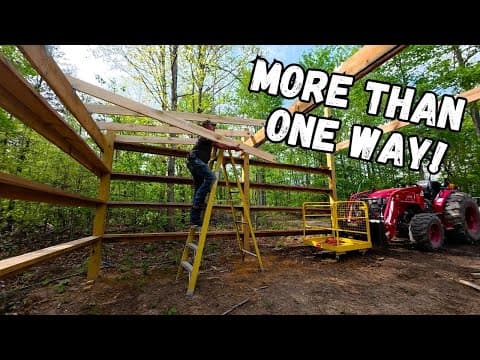
Milling and Raising: Equipment Shed Progress with Peek's Peak Hobby Homestead


Cupping: Understanding and Fixing Warped Wood


Sourcing the Grain: A Deep Dive into Lumber and Molding Species
