The Carbide Solution: Straightening Warped Blades After the Quench
Dealing with warping after a heat treat can be a nightmare, but a new tool using carbide tips might just be the game-changer you need for your Damascus or 1095 billets.

If you’ve spent time with the forge, you know the delicate dance of the heat treat. Getting that perfect quench, achieving the desired hamon, and bringing a piece of billet steel to life is a labor of love. But sometimes, when the steel cools and settles, the blade decides to pick up a bow or a warp. It can be a real pain in the ass, forcing you to spend precious time in the vice or jury-rigging clamps just to get the basic geometry back into line.
For years, the methods were cumbersome. You had the vise, you had the clamps, or maybe you had a friend with a lot of patience and a lot of muscle. But a community member recently introduced a tool that is genuinely changing the game for us makers, and frankly, it’s a huge time-saver that every bladesmith needs to see.
The Carbide Advantage: Hitting the Warp
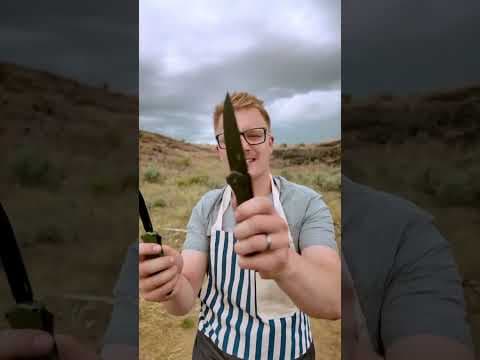
The issue is simple: thermal stress. When you deep cry treat high-carbon steel like Nitro V, the internal stresses are massive. When it cools, it doesn't always settle perfectly flat. The creator in the video details this exact frustration, showing us a new approach using a carbide-tipped straightening hammer.
When we first saw this method, skepticism was warranted. But the mechanics are genuinely clever. The key isn't just the hammer—it’s the tip. The tips are brazed in using carbide, which, as any smith knows, is significantly harder than the hardened knife steel itself. This hardness allows the hammer to make controlled impressions and move the material in a way that traditional tools simply can't replicate.
Mastering the Technique
The method shown isn't intuitive, which is often the case with highly effective new tools. You might think you should flip the blade and hit the opposite side to correct the warp. But the creator demonstrates the counter-intuitive technique: you focus on the area of the most extreme bend, and you hit it on the edge itself. The resulting impact, delivered correctly, causes the blade to self-correct and straighten out.
The process is remarkably efficient. The video shows the dramatic before-and-after on two significantly bowed blades, transforming them from warped pieces of steel into perfectly flat, straight-as-an-arrow blades. The precision is stunning, and the speed is what really sells this tool.
Smiths' Notes on Finishing and Safety
Now, let’s talk shop. While the straightening power is incredible, we are smiths, and we know that nothing comes without a little cleanup. The hammer process, while effective, leaves little impressions in the surface. This is just a fact of the process. Therefore, after the straightener does its magic, you still need to dedicate time to cleaning up the surface with your grinder and hand sanding to ensure the final edge geometry is perfect and the surface is clean for any subsequent polishing or finishing.
For those of us building up a repertoire of custom pieces, time is money. This tool doesn't just save time; it saves heartache—the kind of frustration that comes from scrapping a beautiful piece of Damascus or a finely crafted full tang because of a minor warp. It's a worthwhile investment, especially for a busy workshop.
This kind of innovative thinking is exactly what makes the Rogue Blades community so vital. It’s not just about the fire and the hammer; it’s about the tools, the knowledge, and the sharing of techniques that elevate our craft. If you’re looking to upgrade your workshop, whether it’s a new vise, a better set of files, or a unique process like this, there are people in the community who can guide you.
Ready to take your skills to the next level? Don't just watch—do. Find a certified Blade Angel near you, take a deep dive into a Live Workshop at HolyPlaces, or list your custom commission to connect with other makers. Let's get forging.
Frequently Asked Questions
Loading comments...
Related Posts
Beyond the Myth: What Do Blade Grooves Really Do?


When Form Meets Function (Or When It Doesn't): Analyzing the Weirdest Blades


More Than Just Style: Understanding the Engineering of Blade Grooves
