The Cost of Blame: Why 100% Responsibility is Your Ultimate Conversion Rate Hack
Stop outsourcing your accountability. True control—and massive MRR growth—comes when you accept 100% responsibility for every output in your business.

You’ve optimized your sales funnel. You’ve nailed the lead magnet, and your copywriting is hitting that sweet spot between irresistible and believable. You track your CAC religiously, and your LTV projections look fantastic. But what happens when the inevitable failure point occurs? When the vendor messes up the fulfillment, or the ad platform suddenly flags your account, or the key team member misses a critical detail?
Most founders, even those running sophisticated LLCs with proper S-corp bookkeeping, are experts at pointing fingers. They build elaborate blame shields: *“It was the bookkeeping software.”* *“It was the ad algorithm.”* *“It was the offshore fulfillment center.”*
But the hard truth, the kind of truth that separates the $100k/year operators from the $10M+ founders, is that blame is a tax on your EBITDA. You can’t afford it.
I recently came across a talk that cuts through the noise of modern business excuses. It’s a masterclass in accountability, and for us builders on the Rogue Business side, it’s pure gold. The core message, delivered by Lynn G. Robbins, is simple: 100% responsibility for your actions leads to 100% control of your life and, more importantly, your revenue stream.
The Pain Point: When Blame Costs You the Deal
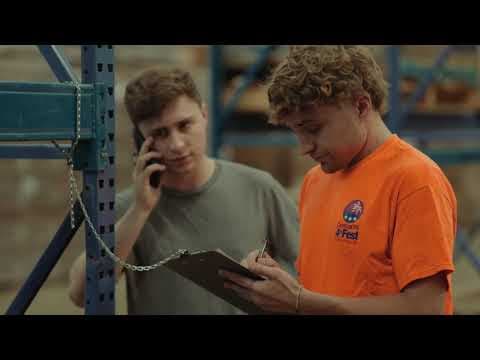
The scenario described in the talk is brutal but painfully relatable. A multi-million dollar account hangs in the balance because of a simple error in distribution—a missing guidebook. The fallout isn't just a lost bonus; it’s the potential loss of the entire client relationship. The initial reaction is deflection: *“You can’t blame us for what the binder division did!”*
But the response—the pivot to accepting total ownership—is the operational blueprint every founder needs to internalize. When the manager insisted, "You will lose your bonus," regardless of where the error originated, it forced a fundamental shift. The team stopped playing the blame game and started optimizing the process. They started calling the other departments *before* the work was done, verifying item by item. They proactively called the client to confirm receipt days early.
From Excuses to Infrastructure: The Sovereign Advantage
This isn't just about being nice; it’s about building bulletproof systems. When you are 100% responsible, you stop relying on fragile, third-party infrastructure that can vanish overnight. You stop building your entire MRR on a single ad account or a single payment processor that can get shadow-banned or shut down without warning.
That’s where understanding the architecture of your business—and your tech stack—becomes mission-critical. The Sovereign Network isn't just another platform; it's the structural advantage that allows operators to build resilient revenue engines. We talk about Liberty Farms hosting because you need infrastructure you *own*. We talk about the AI-assisted marketing tools because you need automation that isn't subject to arbitrary platform whims. The content stack here is designed to be undeplatformable.
If your entire funnel hinges on a single point of failure—be it a payment gateway, a single social media channel, or a single cloud provider—you are operating with 0% accountability for your uptime. You are leaving yourself vulnerable to the whims of others.
Actionable Takeaway: Own the Process, Not Just the Pitch
Being a successful entrepreneur means moving beyond just having a great sales pitch or a killer value ladder. It means owning the *entire* lifecycle. From the initial lead magnet download to the final invoice payment, you must be the final checkpoint. Don't wait for the error to happen; build the mandatory verification step into your SOPs.
If you’re serious about building assets that can withstand the next platform shakeup, stop thinking about optimizing the *front end* of your funnel and start hardening the *back end* of your operations. Find a Business Angel who understands infrastructure risk, list a service that requires absolute operational integrity, or claim a creator profile here on the Sovereign Network. Stop accepting external failure points. Start building where you control the rails.
Frequently Asked Questions
Loading comments...
Related Posts

Navigating the Cycle: Where True Value Hides When the Market Gets Scary


Bulk Buying: Separating the Opportunity from the Operational Scam


The Illusion of Local Support: Why 'Mom-and-Pop' Isn't Enough for Modern Scale
