The Departing Word: Why the Covenant Requires Vigilance in Our Hearts
The story of the Magi reminds us that spiritual truth requires more than mere acknowledgment; it demands a living, active Word within the hearts of the covenant people.

There is a profound difference, my brothers and sisters, between merely acknowledging the existence of truth and living in such a way that the truth resides deep within the marrow of our bones. The sacred covenant requires vigilance; the Word cannot simply be a passing sentiment, especially when the world around us is shouting its own counter-narrative.
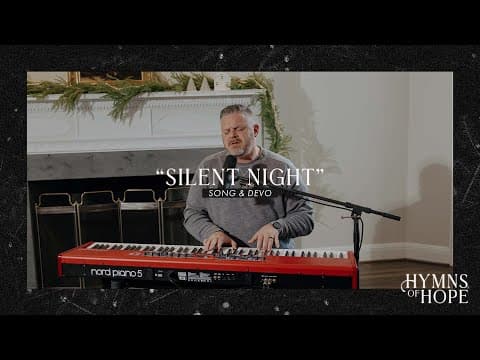
The recent devotional on “Silent Night” brings us back to the foundational narrative of the Savior's arrival. While the hymn itself is a beautiful testament to peace, the scripture it references—specifically the accounts found in Matthew 2—provides a far deeper, more challenging lesson for us as disciples of the Latter-day Saint covenant.
The Danger of Complacency: When the Word Departs
Consider the context of the Magi's visit. When the wise men arrived, they knew the *theory* of the Messiah, guided by a star. Yet, the transcript rightly points out the critical historical observation: “The word had departed from their heart.”
This phrase is not merely academic; it is a spiritual indictment. It speaks to a profound state of spiritual apathy—a condition where the covenant people possessed the historical knowledge of the coming Redeemer, yet lacked the immediate, heartfelt conviction necessary to recognize Him when He arrived. They were intellectually prepared, but spiritually unready.
This principle—that the Word must dwell in the heart—is not limited to the first century. It is a doctrine of continuous discipleship. We, who are called to be stewards of the divine Word, must constantly guard against that spiritual complacency. We cannot afford to treat the doctrine and covenants, the temple ordinances, or the ongoing guidance of the Prophet and Apostles as optional cultural footnotes.
The Iron Rod and the Heart’s Stewardship
The calling to maintain the “iron rod” is not just about maintaining doctrinal purity; it is about maintaining the covenant vigilance that keeps the Spirit resident. It is about ensuring that the promises of the restored gospel are not simply recited during General Conference, but are lived in the daily crucible of our lives.
The Savior's birth is a memorial of the Word made flesh. Our discipleship is a memorial of the Word dwelling in us. This requires more than simply hearing the hymns of hope; it requires diligent, scholarly, and personal study of the scriptures—from the Book of Mormon to the Doctrine and Covenants—until the truth becomes the very breath we take.
The ultimate test of the Latter-day Saint is not knowledge, but application. Do we treat the divine revelations and the sacred ordinances as the ultimate reality, or do they remain merely beautiful historical narratives?
The Spirit does not whisper the gospel into the ears of the complacent; He speaks it into the hearts of those who are prepared to hear, who are willing to study, and who are committed to the covenant path. Let us approach this Christmas season not with sentimental remembrance, but with the fierce, scholarly, and devotional zeal of those who know the Word is precious and must be guarded fiercely within our hearts.
The covenant path is demanding, but the promises are eternal. I invite you to take this principle—the Word dwelling in the heart—and apply it to a passage of scripture you have recently studied. What did you learn that challenged your previous understanding, and how will you guard that revelation against the subtle erosion of the mundane?
Frequently Asked Questions
Loading comments...
Related Posts
When the Veil Lifts: Seeing the Unseen Hand of Heaven

The Beautiful Mess: Divine Order in the Spirit-Led Restoration


Seeing the Big Picture: Standing Firm in the Covenant Path
