The Weight of Authority: Pilate's Dilemma and Our Own
The Gospel of John reveals a stark confrontation between Roman power and Jewish law during Christ's trial. Examining Pilate's choices illuminates the subtle but pervasive pressures we face in upholding truth and righteousness.

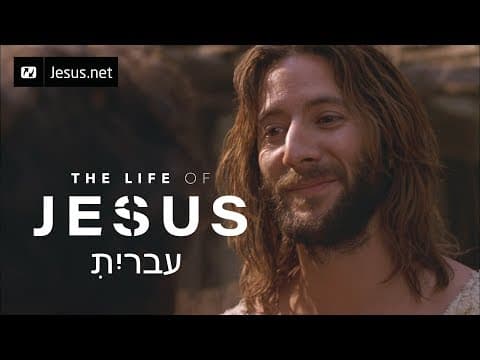
The scene unfolds with a familiar, yet profoundly unsettling, gravity: Pilate, Roman procurator, confronted with a man claiming divine authority. The transcript excerpt we’re considering—a portion of The Life of Jesus presented in Hebrew—lays bare the political and legal maneuvering that led to the crucifixion. But it's not merely a recounting of historical events; it’s a mirror reflecting the challenges Latter-day Saints face in navigating earthly authority and divine counsel. We are called to be witnesses, and witnesses often find themselves at odds with the prevailing powers of the world.
Pilate's internal conflict is palpable. He sees no reason to condemn Jesus, yet the crowd’s clamor, fueled by religious animosity and political expediency, forces his hand. He attempts to alleviate the situation with a theatrical display, presenting Jesus crowned with thorns and proclaiming, “Here is your king!” (John 19:15). This wasn't genuine deference, but a cynical attempt to deflect responsibility. The crowd's response – “We have Caesar!” – highlights the stark contrast between earthly dominion and the kingdom of God. They recognized a different kind of authority, one they were unwilling to acknowledge in the man before them. This echoes the struggles faced by those who have ever sought to uphold truth in the face of popular opinion; the Lord’s admonition in 3 Nephi 14:27 rings clearly: “And if men come unto you, and say unto you, I am Christ, and they show not unto you the path which the prophets have shown, and the signs which have been given by the mouth of your fathers, then is it not because they are not of him, nor with him?”
Consider Pilate's words to Jesus: “You have authority over me only because it was given to you by God.” (John 19:11). This brief acknowledgment, however reluctant, speaks volumes. Even a Roman governor, wielding immense power, recognized a higher authority at play. It’s a sobering reminder that all earthly power is derivative, a stewardship granted by the Almighty. How often do we, in our own lives, subtly yield to the pressures of the world, rationalizing compromises as necessary for expediency or to avoid conflict? We may not face a literal crucifixion, but the principle remains: to stand firm in righteousness often demands sacrifice, and that sacrifice may involve challenging the norms and expectations of those around us.
The transcript also highlights the precariousness of discipleship. Pilate, fearing repercussions from Caesar, washes his hands of the matter, transferring the responsibility—and the guilt—to the mob. This act of abnegation, while seemingly expedient, leaves a stain on his legacy. It serves as a cautionary tale: avoiding accountability may offer temporary relief, but it ultimately diminishes the soul. President Howard W. Hunter taught, “The Lord expects us to be honest in all things, true to the best of our knowledge, and to carry out his will.” (Teachings of Howard W. Hunter, p. 238).
The experience of the early Church, as described in Acts, is replete with examples of believers facing similar dilemmas. They were persecuted for their faith, threatened with imprisonment, and pressured to conform. Yet, they persevered, guided by the Spirit and strengthened by their covenant relationship with God. D&C 121:4 offers a powerful directive: “Doubt not, but be diligent in watching unto prayer, and at all times remember the love of thy very God, and never let thy foot slip.” The iron rod of knowledge, as spoken of in D&C 84, provides a firm foundation, a path to navigate the complexities of mortality.
Let us reflect on Pilate’s choice, and examine our own hearts. Where are we yielding to the pressures of the world? Where are we compromising our principles for the sake of ease or acceptance? May we strive to emulate the unwavering faith of those who have gone before us, and to stand firm in truth, even when it demands a heavy price.
Further Study: Consider the accounts of other trials and persecutions found in the scriptures. How did those individuals maintain their integrity and faithfulness? What lessons can we draw from their experiences?
Submit Your Insights: We invite you to share reflections on moments where you have wrestled with authority and the demands of discipleship. What principles have guided you? What challenges have you overcome?
Spirit-Led Prompt: Ponder a recent decision you made. Did you act in accordance with your covenants and the counsel of the Brethren, or did you compromise your values to appease others?
Frequently Asked Questions
Loading comments...
Related Posts

Misunderstanding the Father's Love: Atonement and the Nature of God


The Living Words: Finding Iron Rod Clarity in Jesus' Teachings


The Erosion of the Law: A Matter of the Heart