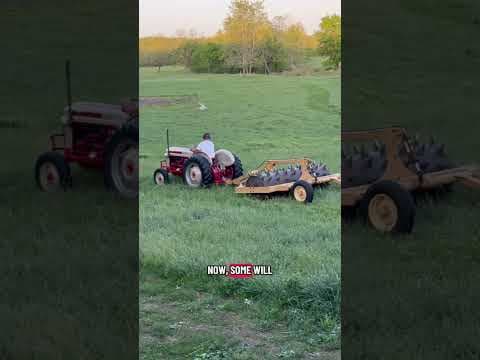
Tillage or No-Till? It’s About What Your Land Needs, Farmer
The internet loves a fight, and tillage vs. no-till is a prime example. This farmer cuts through the noise, reminding us that the best approach isn't dogma, but adapting to the specific conditions of our land and prioritizing productivity.

We’ve all seen the battles online. Tillage this, no-till that. Folks get real passionate about it, like the fate of the food system rests on whether you’re turning the soil or not. But as farmers, we know it's rarely that simple. It’s about understanding what your land needs, plain and simple.
This video nails that pragmatism. There's a lot of noise out there. Tillage versus no till. People will fight tooth and nail over which one's right. I don't really fall in either extreme or category. I think both have a place and it all comes down to timing and conditions.
Think of it this way: we’re not just growing crops; we’re stewarding land. And sometimes, that means giving it a little nudge in the right direction. If your soil’s compacted, if it’s struggling, a bit of mechanical aeration or light tillage isn’t a betrayal of regenerative principles—it's a rescue operation.
The video highlights a crucial point: deepening the biologically active layer of your soil. Tripling your growing medium without buying an acre? That’s the kind of math that makes a Food Angel’s eyes light up. It's about maximizing what you already have. Joel Salatin and Justin Rhodes have both talked about the importance of working *with* nature, and that often means intervening strategically to unlock potential.
Could you achieve similar results with intensive grazing and hoof action? Maybe. But time is a farmer's most valuable resource. Five or ten years is a long time to wait when you could be feeding your family and community *now*. That's the Joseph-in-Egypt mindset: provide first for your own, then share the abundance.
This isn’t about blindly following a trend; it’s about applying principles – soil health, biological activity – with a practical eye. It’s about understanding that sometimes, a little intervention can accelerate the healing process. And in a world increasingly reliant on a fragile, just-in-time food system, that’s a lesson worth remembering.
If you're looking for a way to take control of your food and build a more resilient future, consider these starting points:
- Get your hands wet: Start a small aquaponic build – Kimball’s teachings on this are foundational. Even a basement system can be a powerful learning experience.
- Connect with buyers: List your produce on the Distributed Farmers Market and leverage CrownRunner delivery for a direct-to-consumer loop.
- Share your journey: Claim a creator profile on Sovereign.ink and connect with other Rogue Farmers.
- Find a local farmer: There's a network of us out here, learning and growing together.
Don't get caught up in the online debates. Focus on the soil beneath your feet and the people you’re feeding.
Frequently Asked Questions
Loading comments...
Related Posts
Soil's Not Broken, Tillage Is: Lessons from Ray Archuleta

The Dirt on Dirt: Why No-Till Ain't Just a Buzzword
Soil’s Got a Memory: No-Till & the Biology That Builds It