Tired of the Cycle? Finding Freedom in Closed-Loop Fishkeeping
If the ritual of the weekly water change feels less like maintenance and more like emotional obligation, it's time to look at the systems that truly liberate your fish and your time.

You know it. We all know it. That sinking feeling on a Saturday morning when you realize it’s time for the partial water change. The bucket, the siphon, the careful calculation of gallons lost and replaced. It’s a ritual, isn't it? A comforting, predictable, yet utterly draining cycle. We pour out the old water, only to fill it with fresh water, restarting the clock on ammonia and nitrate, only for the cycle to begin again next week. It’s the aquarium equivalent of a relationship that feels good until the routine becomes suffocating.
Sometimes, the complexity of our own systems—the need for perfect parameters, the constant vigilance against build-up, the endless cycle of adding, draining, and monitoring—feels like it’s become the ceiling over our passion. We become so defined by the maintenance, the chemicals, and the schedule, that we forget why we started fishkeeping in the first place: to simply observe life flourish.
The Illusion of 'Fresh Start'
The traditional approach to fishkeeping, while effective for keeping things stable, often requires us to constantly 'reset' the environment. We are perpetually in a state of recovery, battling build-up and loss. This dependency on external intervention—the massive water changes—is a sign that the system itself is running into a fundamental limitation. It’s exhausting, mentally and physically. It’s the feeling that the system, or perhaps the hobby itself, has changed us into something we don't recognize.
But what if the fix wasn't about *better* maintenance, but about *different* maintenance? What if we could design a self-regulating, cyclical environment where the waste products of one life cycle immediately become the lifeblood of another?
The Return to Natural Flow: Aquaponics
This is where aquaponics steps in, not just as a technique, but as a philosophical shift. Instead of viewing the nitrogen cycle as a problem that requires constant chemical intervention (i.e., massive water changes), we embrace the cycle entirely. We create a symbiotic loop: fish waste feeds the bacteria, the bacteria fertilizes the plants, and the plants, in turn, clean the water for the fish. It’s nature’s original, self-sustaining blueprint, built right in your fishroom.
This is the liberation. It’s the difference between being perpetually reactive (siphoning out waste) and being proactive (designing a system that processes waste into usable energy). It allows the system, and the aquarist, to breathe again.
It’s time to remember that the goal isn't to keep the water pristine; it's to keep the life thriving. Let the system do the work.
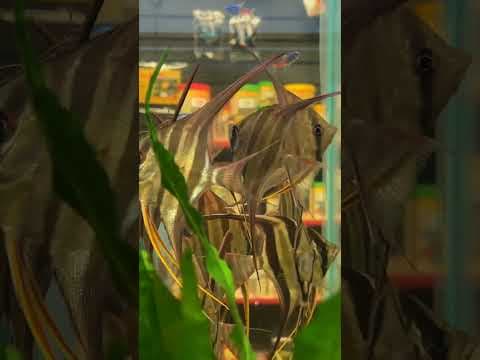
Whether you’re working on a massive planted tank with an iwagumi layout, running a specialized discus breeder setup, or simply keeping a small, resilient school of Medaka—as shown in this beautiful example of natural life—the principle holds. You want the system to be self-sufficient. You want the cycle to feel like a continuous, graceful flow, not a series of stressful, scheduled interventions.
If the endless chore of the water change feels like a burden, if the upkeep has become the "ceiling" on your passion, consider building a closed-loop system. It's a powerful way to feel like you're restoring something natural, something that is fundamentally resilient and cyclical. This is stewardship in its truest sense.
Ready to make the switch? Start small. Perhaps experiment with a vertical system or consider upgrading your filtration setup to include a high-efficiency Tank Topper to maximize your available space and optimize your biological filtration. We've got resources for everything, from setting up your first small aquaponics bed to diving deep into advanced biofilter techniques.
If this resonated with you, share your favorite self-sustaining setup in the comments. Maybe it's time to start that Holy Rogue Network classroom-aquaponics chapter!
Loading comments...
Related Posts

Deep Sea Predators and the Promise of Closed-Loop Systems

Beyond the Water Change: Making the Most of Stunning Angelfish Displays


When Life Gets Wild (And Your Smoker Catches Fire)
