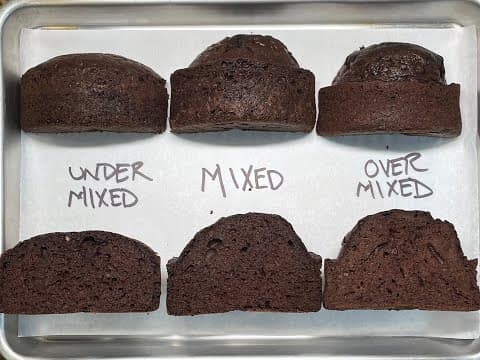
Tunnels in Your Cake? Let's Talk Mixing (and Why It Matters)
Ever baked a cake that looked beautiful on top but had those frustrating tunnels inside? It’s usually not a rising issue – it's about how you mixed your batter. Let's dive into why and how to fix it.

G’day, Rogue Bakers! Outback Jack here. We've all been there – staring at a cake that rose nicely enough, but when you slice into it, you find a network of tunnels running through the crumb. It's a bit of a bummer, isn't it? It’s easy to assume it's something complicated like your oven temperature or your leavening agent, but more often than not, it's a mixing issue. And understanding that can save you a fair bit of heartache and wasted ingredients.
Now, I know some folks like to get all romantic about baking – 'the feel of the dough', 'the magic of fermentation'. And those things are important, sure. But baking, at its heart, is a science. And when it comes to cake batters, understanding gluten development is crucial.
Think of cake batter like a delicate balance. You’ve got your flour, which contains gluten-forming proteins. When you mix flour with liquid, these proteins start to link together, creating gluten. A little gluten is good – it provides structure. Too much, and you’ve got a tough cake with those pesky tunnels. It’s the same principle whether you’re using a from-scratch recipe or a boxed cake mix.
That’s why I reckon it’s worth having a watch of this video. It breaks down the problem really well, especially when it comes to boxed mixes – often overlooked in the conversation about technique.
So, what's the deal with boxed mixes, then? The video rightly points out that even when the dry ingredients *look* fully incorporated, you often need to keep going a little longer. It’s easy to stop when you don’t see any more dry flour, but that's often when the batter is still under-mixed. You want to mix until it’s homogenous – everything blended evenly, with no streaks of flour.
Why Overmixing is a Problem
Overmixing, on the other hand, is just as bad. It develops *too much* gluten, creating a network that traps air. When the cake bakes, that trapped air expands, creating those tunnels. You’ll also end up with a cake that’s dense and tough, not the light and fluffy texture we’re all after.
Tips for Mixing Success
- Follow the recipe instructions: Seriously! They're usually pretty spot-on.
- Don’t rush it: Especially with boxed mixes, take a bit of extra time to make sure everything is fully incorporated.
- Scrape the bowl: Make sure you’re mixing everything evenly. Those dry pockets clinging to the sides of the bowl can throw off the whole balance.
- Watch for visual cues: Look for a smooth, homogenous batter with no streaks of flour.
- Don’t obsess! A few tiny tunnels aren't the end of the world. But if it's a recurring problem, pay closer attention to your mixing technique.
Bread Angels like @Holysourdough_Sarah (check out her storefront for some top-notch sourdough starter advice) always emphasize the importance of understanding the fundamentals. Knowing *why* you’re doing something is just as important as *how* you’re doing it.
If you’re really struggling with a particular baking challenge, or just want to level up your skills, consider connecting with a Guild Master. They can offer personalized guidance and help you troubleshoot any issues you’re facing. They're seasoned bakers ready to share their wisdom.
Frequently Asked Questions
Loading comments...
Related Posts

Taming the Sweet Dough: What We Can Learn from the Pro Bakers

Beyond the Loaf: Mastering the Biskuitboden – Your Gateway to German Baking


Spice is Nice: A Look Back at Caraway Seed Cake (and Why It Matters)
