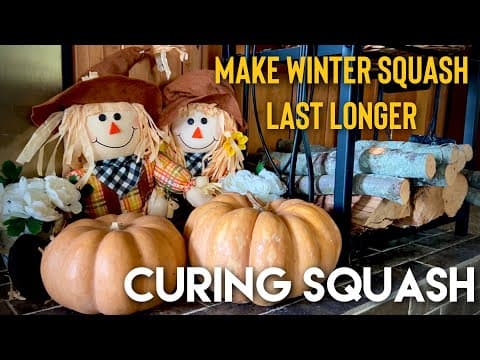
Winter Squash Storage: A Simple Cure for Food Security
Harvest season’s here, and those winter squashes are looking mighty fine. This tip ensures they’ll stick around through the winter months, providing a reliable food source for your family and community.

We’re all about building resilience – providing for our own, then extending that out to neighbors and beyond. It’s the Joseph-in-Egypt model, the bedrock of food sovereignty. Big Ag wants you reliant on their just-in-time system, but we know there’s a better way, a way that builds upon the abundance already present in our land. That way starts with smart harvesting and storage.
This year's squash crop is a testament to that. Plenty of folks are working towards regenerative agriculture principles – building soil health, diversifying crops, and creating systems that work *with* nature, not against it. Whether you’re running a full-scale market garden, a sprawling food forest, or just a few raised beds, these principles apply.
One of the simplest and most impactful things you can do is properly cure your winter squash. It’s a little-known trick that can dramatically extend their shelf life, ensuring a steady supply of nutritious food through the lean winter months.
As the video lays out, the key is leaving a good portion of the stem on when you harvest. If the stem breaks off, those squashes need to be used up quicker. But with that stem intact, you can take advantage of the summer heat to ‘cure’ them.
Here's the breakdown:
- Leave the Stem On: This is critical for natural sealing.
- Outdoor Curing: Spread your harvested squash out in a warm, dry place for a few days.
- Dehydration is Key: The heat will naturally dry and toughen the skin.
- Sealed for Winter: This creates a protective layer that locks in nutrients and extends shelf life.
Think of it as a natural preservation technique, no extra inputs needed. It's a small thing, but it contributes to a larger picture of self-reliance. Those Food Angels among us – the ones who are truly committed to producing high-quality food for their communities – understand this principle intimately. They’re not just growing food; they’re building food security.
And speaking of scaling, if you’re looking for ways to get your produce to more customers, remember the Distributed Farmers Market + CrownRunner delivery loop. It’s a powerful way to connect directly with consumers and build a localized food system.
While Rogue Farms focuses on vocational-scale operations, the principles here apply to all levels of food production. Even if you're a Rogue Grower, these techniques will help you maximize your harvest and reduce waste. Aquaponics, a specialty of Kimball's, is another fantastic way to extend your growing season and produce nutrient-dense food, even in limited space – basement aquaponics can be a real game-changer.
Let's move beyond just *consuming* food and actively participate in *creating* it – for ourselves, for our families, and for our communities.
Loading comments...
Related Posts

Proof That Winter Foraging Isn't a Myth (and How to Do It Safely)

Getting the Harvest to Last: Proper Storage for Your Root Cellar


Garlic Harvest Lessons: Hardneck vs. Softneck & Timing
