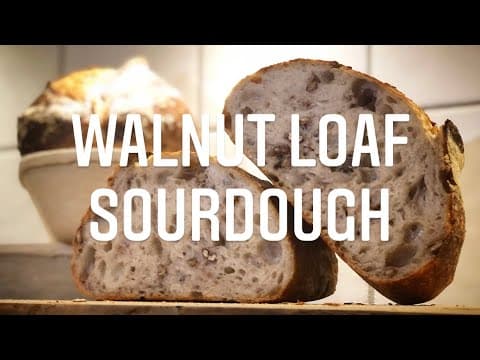
Walnut Sourdough: Colour, Texture & Why It Matters
Want a loaf with a beautiful purple hue and a lovely open crumb? This walnut sourdough recipe from Simpel Surdej walks you through the 'why' behind the process – from flour choice to walnut prep – so you can truly understand what you’re doing.

G’day, Rogue Bakers! Been a while since we tackled something a bit different, hasn’t it? We’re diving into a walnut sourdough recipe today, and not just *how* to make it, but *why* certain steps are done the way they are. This recipe, demonstrated beautifully by Simpel Surdej, focuses on achieving a gorgeous colour and that sought-after open crumb – and understanding the reasons behind their methods will level up your sourdough game.
The recipe itself calls for a blend of strong white flour, purple wheat, and of course, walnuts. Now, that purple wheat is the key to the colour, and the recipe rightly points out that other nuts won't give you that same effect. But it's not just about aesthetics; the way you incorporate the walnuts has a big impact on the final result. Blending them and adding hot water draws out more colour and creates a denser loaf, while adding them later – as Simpel Surdej does – promotes a more open crumb and better texture. Think of it like this: the gluten strands need space to develop, and those blended walnuts can get in the way. It's about mindful baking, not just following instructions.
Water Temperature: A Critical Point
Pay close attention to the water temperature. Lukewarm water is crucial. Cold water will stall the fermentation process, leaving your dough sluggish and unhappy. It’s a common mistake for beginners, and one that can lead to frustration. Just like a campfire needs kindling, your dough needs a gentle warmth to get things going.
The Importance of Resting & Strength
The recipe highlights a resting period after mixing the flour and water. This allows the flour to fully hydrate and the gluten to begin developing. Then, the sourdough starter (levain) and salt are added. Simpel Surdej demonstrates a good technique – incorporating the starter and salt with a wet hand and mixing until the dough gains strength. That’s the key – you’re not just mixing ingredients; you’re building structure.
Walnut Incorporation & Benetton Prep
Adding the walnuts at the right time is another crucial detail. As mentioned, it contributes to that beautiful open crumb. And speaking of beautiful, let's talk about benetton preparation. Simpel Surdej uses a 50/50 mix of rice flour and wheat flour, which is a fantastic tip to prevent sticking. A light dusting is all you need – too much flour can dry out your loaf.
Beyond the Recipe: Understanding Fermentation
This recipe isn’t just about following steps; it's about understanding the science behind sourdough. The purple wheat and walnut inclusions influence fermentation rate, and the water temperature directly affects activity. Think of your sourdough starter as a living thing – it responds to its environment. The more you observe and understand, the better your bread will be.
If you're keen to push your sourdough skills further, remember there's a whole community waiting to support you. Whether you're just starting out or looking to refine your techniques, the 30-Day Sourdough Challenge is a fantastic way to build consistency and confidence.
Frequently Asked Questions
Loading comments...
Related Posts

The Science of the 'Better' Bite: When Does Food Magic Happen?


When the Recipe Needs More Than Just Flour: Finding the Rhythm in Baking

Fermentation Time: The Secret to a Beautiful Crumb (And Why Rushing It Never Works)
